 +971 56-580-9888
 77, M floor - Al Maiyani Street - Abu Dhabi
Introduction
Cellulite is one of the most common things clients ask us about at Revives Home Spa, and it usually comes with the same follow up question. Should I book maderotherapy, or would a traditional massage do the same job? On paper, both treatments claim to reduce the appearance of cellulite and smooth the skin. In practice, they work in genuinely different ways, and understanding that difference makes it much easier to choose the right one for your goals.
This guide breaks down what actually separates maderotherapy from traditional cellulite massage, from the tools used to the results you can realistically expect.
What traditional cellulite massage involves
Traditional cellulite massage relies on hands on techniques, using the therapist’s hands, knuckles or forearms to knead, press and manipulate the skin and underlying tissue. Techniques like deep tissue massage or specific anti cellulite hand massage aim to improve circulation, break down tension in the muscle, and encourage lymphatic flow through direct manual pressure.
This approach has been used for decades and remains effective for general relaxation, muscle tension relief, and mild improvements in circulation. It is a gentler, more generalised technique that can be adjusted easily in pressure and pace throughout a session.
What maderotherapy involves
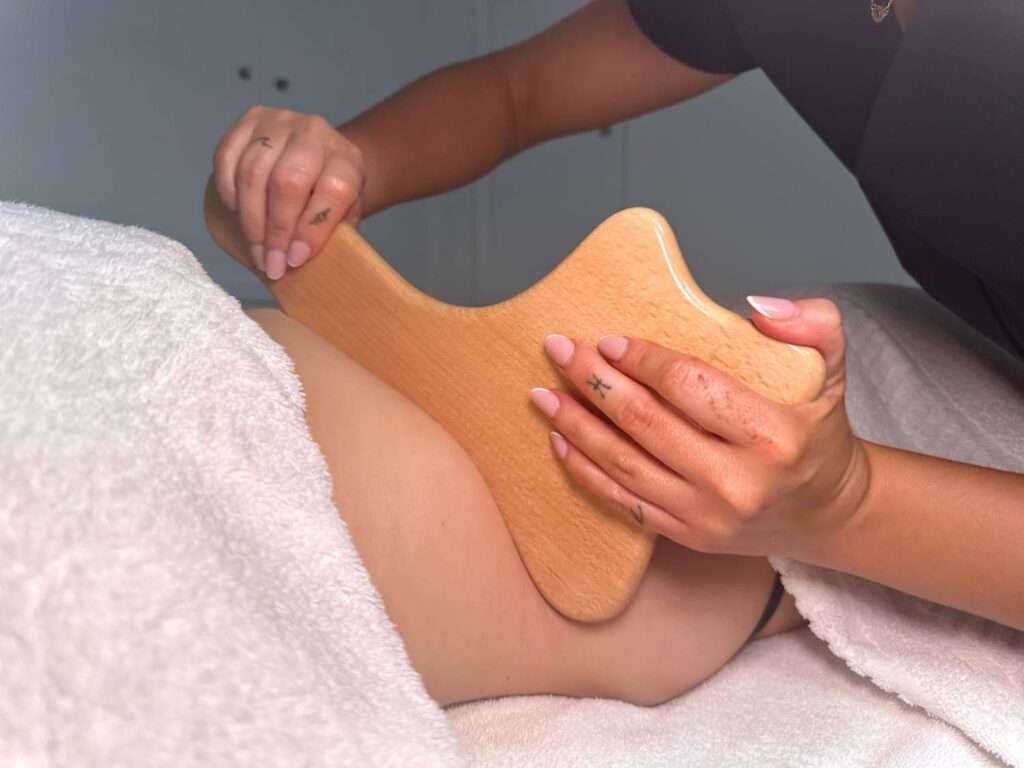
Maderotherapy, also known as wood therapy, uses specially shaped wooden tools instead of hands to apply pressure to the skin and tissue. Originating in Colombia, the technique uses rollers, cups and sculpting tools designed to target specific areas with more concentrated, consistent pressure than hands alone can typically achieve.
Because the wooden tools are shaped for specific areas of the body, such as the thighs, abdomen or hips, they can apply targeted pressure more precisely and consistently across a treatment area than manual massage generally allows.
The key differences that actually matter
Pressure and precision
Wooden tools allow for firmer, more concentrated pressure than hands typically apply, and that pressure stays consistent throughout the stroke. Traditional massage pressure varies more naturally depending on hand fatigue and technique, which can make maderotherapy feel more intense but also more targeted, particularly on areas with more stubborn cellulite.
How each technique affects tissue
Maderotherapy is specifically designed to help break down fibrous tissue and fatty deposits beneath the skin, which is a major contributor to the dimpled appearance of cellulite. Traditional massage primarily improves circulation and relaxes surface muscle tension, which supports skin appearance more indirectly rather than working as directly on the fibrous bands under the skin.
Speed of visible results
Many clients report noticing changes in skin texture sooner with maderotherapy than with traditional massage, largely because the technique targets the fibrous tissue associated with cellulite more directly. Traditional massage can still improve how skin looks and feels, but the changes tend to build more gradually and are often more closely tied to circulation improvements than to structural changes in the tissue itself.
Sensation during treatment
Maderotherapy tends to feel more intense than a traditional massage, given the firmer, more concentrated pressure of the wooden tools. Some clients find this deeply satisfying, while others need a session or two to adjust to the sensation. Traditional massage generally feels gentler and more universally relaxing from the very first session.
Which one is right for your goals
Choose maderotherapy if you want targeted cellulite and contouring results
If your main goal is reducing the visible appearance of cellulite and achieving a more sculpted look in specific areas, maderotherapy is generally the more targeted option. Its precision and pressure make it particularly well suited to areas like the thighs, hips and abdomen where cellulite tends to concentrate.
Choose traditional massage if you want broader relaxation alongside mild cellulite improvement
If relaxation, general muscle tension relief and a gentler overall experience matter as much to you as cellulite reduction, a traditional massage may be the better fit. It still supports circulation and skin appearance, just through a softer, more universally comfortable technique.
Combining both approaches
Many clients at Revives choose to combine maderotherapy sessions with regular lymphatic drainage massage, using the deeper, tissue focused benefits of wood therapy alongside the fluid clearing benefits of lymphatic work. This combination often produces more complete results than relying on either technique alone.
What to expect from a maderotherapy session
A typical maderotherapy session at Revives runs around 90 minutes and uses a range of wooden rollers, cups and sculpting tools tailored to your target areas. Your therapist will start with a consultation to understand your goals, whether that is cellulite reduction, inch loss or general body contouring, and adjust pressure and technique throughout the session to your comfort level.
If you are considering maderotherapy for the first time, our guide on how many sessions it takes to see a difference covers what a realistic results timeline looks like.
Frequently asked questions
Is maderotherapy more effective than traditional massage for cellulite? Maderotherapy is generally more targeted for cellulite specifically, since the wooden tools apply firmer, more consistent pressure to fibrous tissue than hands typically can, though both techniques offer genuine benefits depending on your goals.
Does maderotherapy hurt more than a traditional massage? Maderotherapy tends to feel more intense due to the firmer pressure of the wooden tools, though it should not be painful. Traditional massage generally feels gentler and more relaxing throughout.
Can I switch between maderotherapy and traditional massage during a course of treatment? Yes, many clients combine both approaches, using maderotherapy for targeted cellulite work and traditional or lymphatic massage for broader relaxation and circulation support.
How many maderotherapy sessions are needed compared to traditional massage for similar results? Maderotherapy often shows visible changes to skin texture somewhat sooner than traditional massage, since it targets fibrous tissue more directly, though both generally require a consistent course of sessions for lasting results.
Is one technique better suited to sensitive skin? Traditional massage is generally gentler and may suit more sensitive skin better initially, though maderotherapy pressure can be adjusted by your therapist to suit your comfort level as well.
Choosing the technique that fits your goals
Maderotherapy and traditional cellulite massage both have a genuine place in body contouring and skin care, but they work differently and suit slightly different goals. Maderotherapy offers more targeted, tissue focused results for cellulite, while traditional massage provides a gentler, more broadly relaxing experience with circulation benefits.
If you would like help deciding which treatment suits your goals, book a consultation with Revives Home Spa today or call us at +971 56-580-9888.